Feet sinking into snow with every step. Cold that gets in everywhere, no matter what you’re wearing. Long nights, isolation, silence.
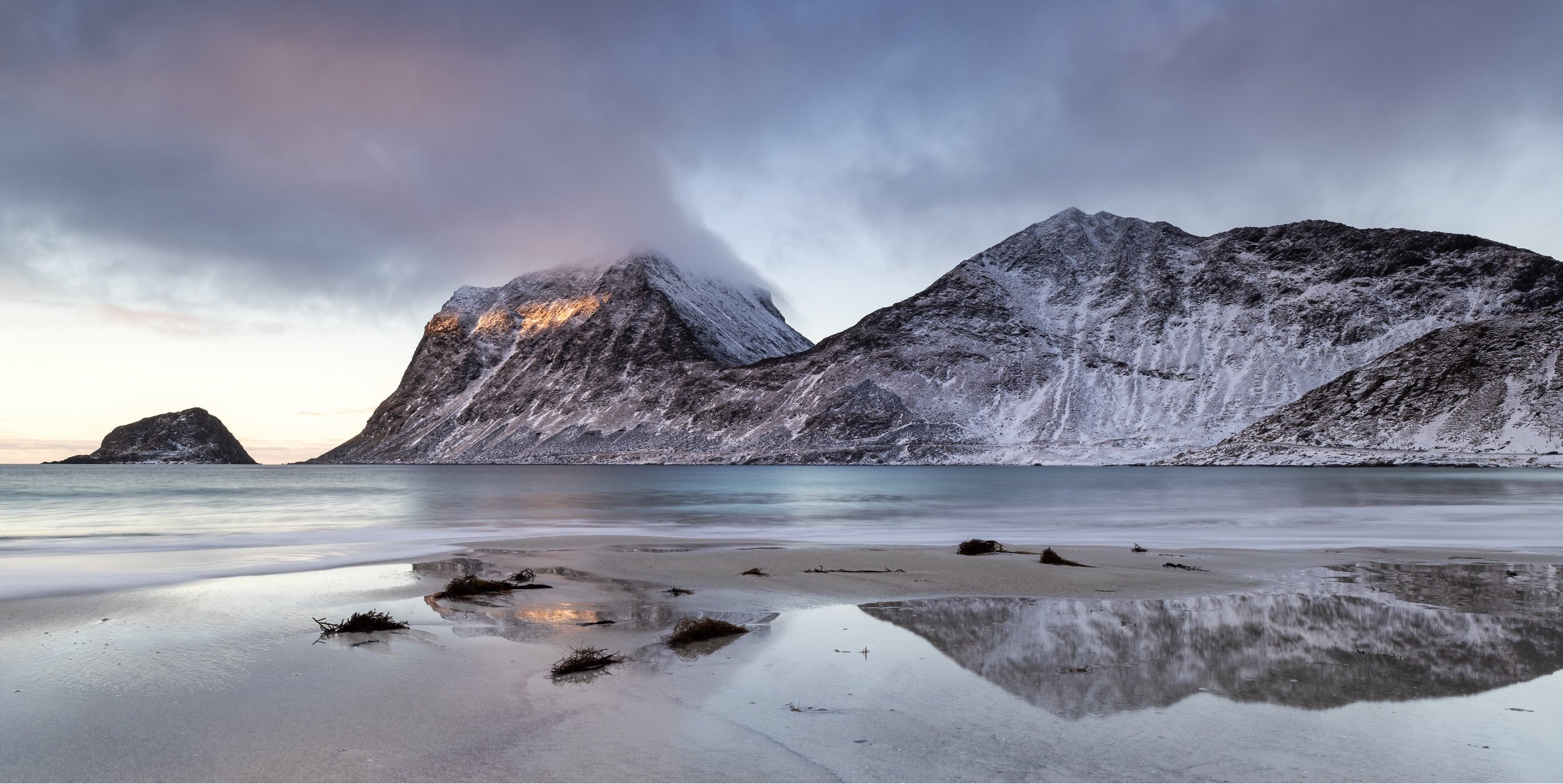
These are the hallmarks of an Arctic winter, and yet the Lofoten Islands in Norway are among the most beautiful places I have ever stood. Countless inlets, overlooked by jagged snowcapped peaks that rise straight out of the sea. At dawn the sky washes pink and purple, and the sheltered fjords hold it all in perfect reflection. By day the water turns soft blue, green, turquoise.
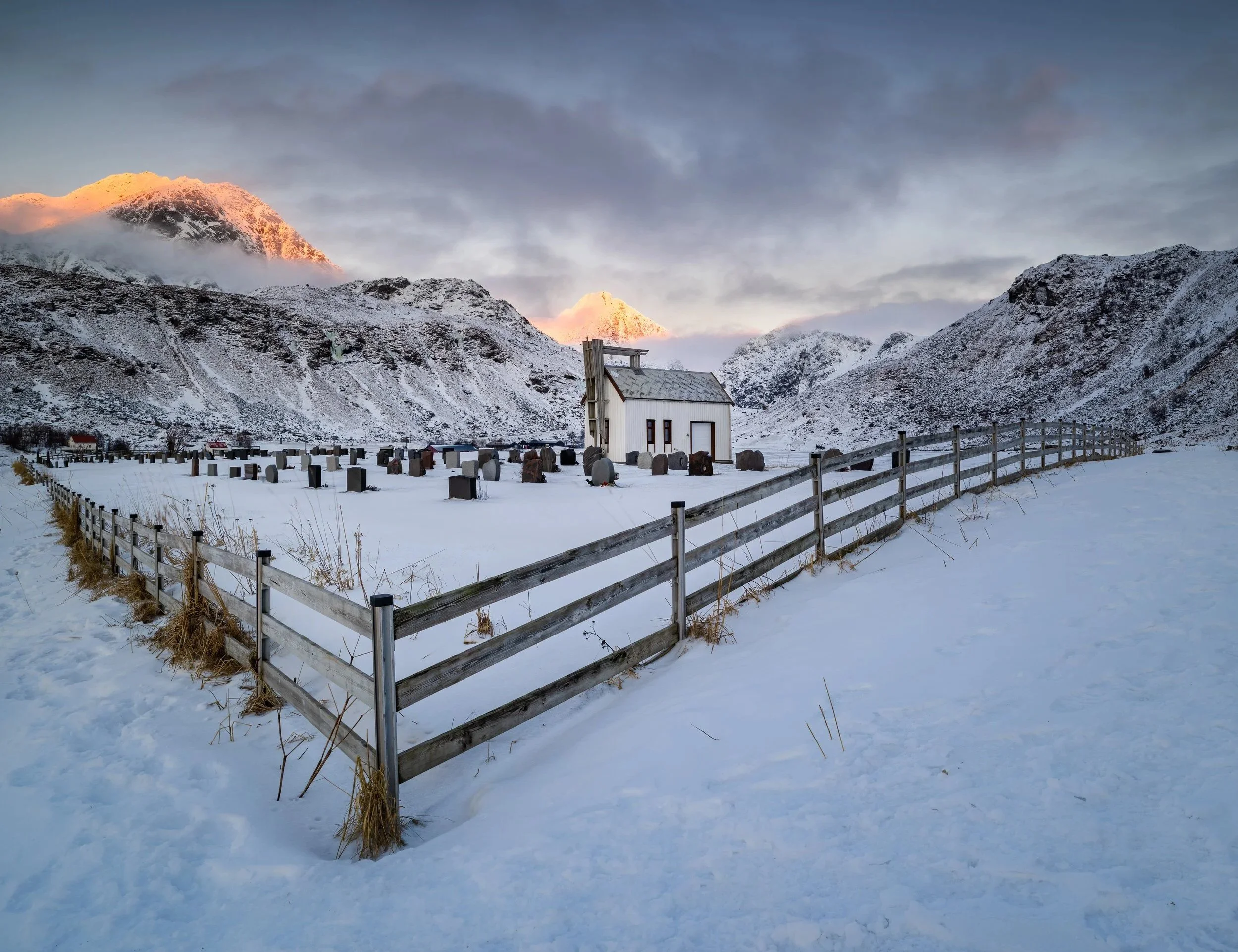
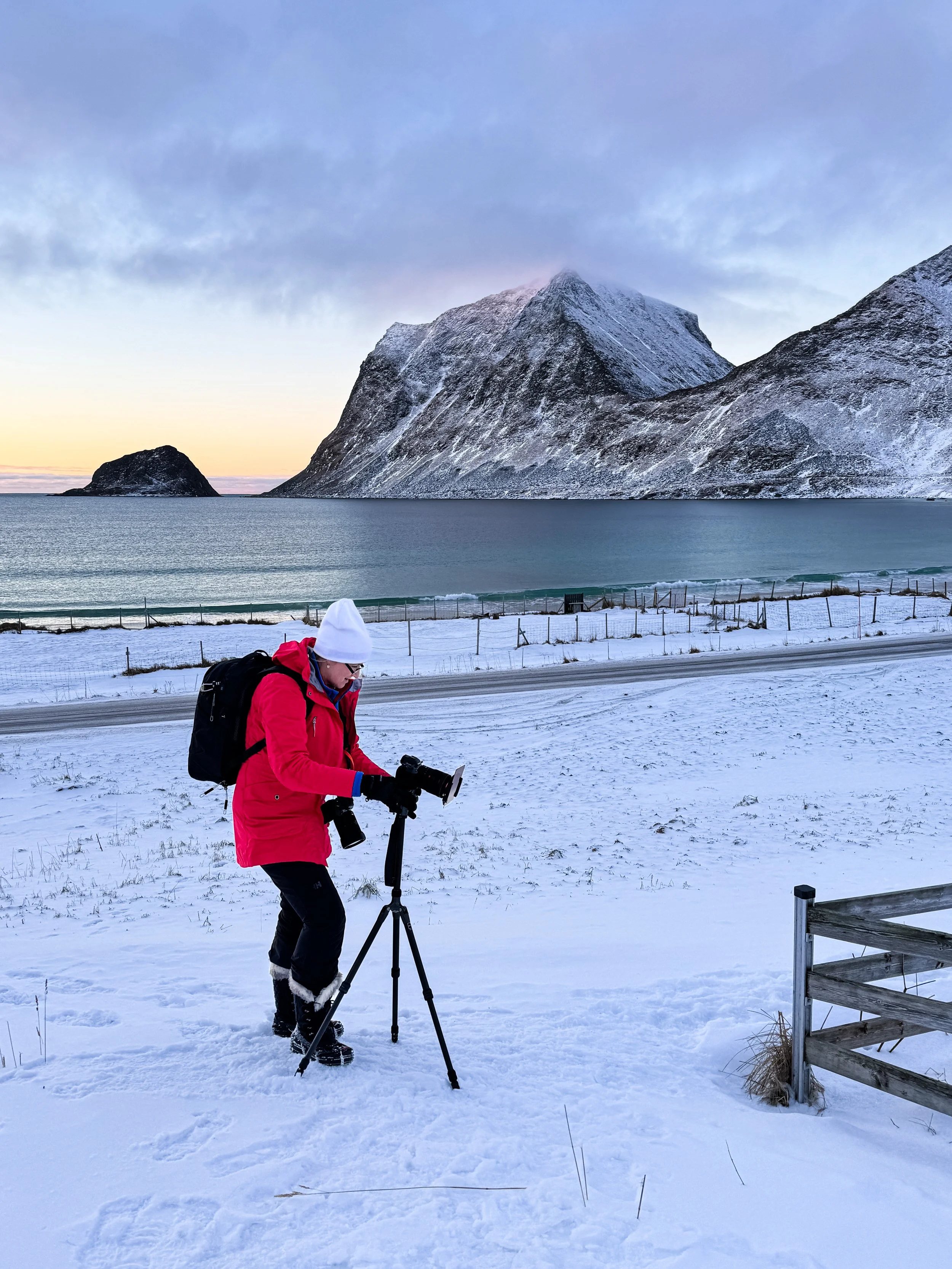
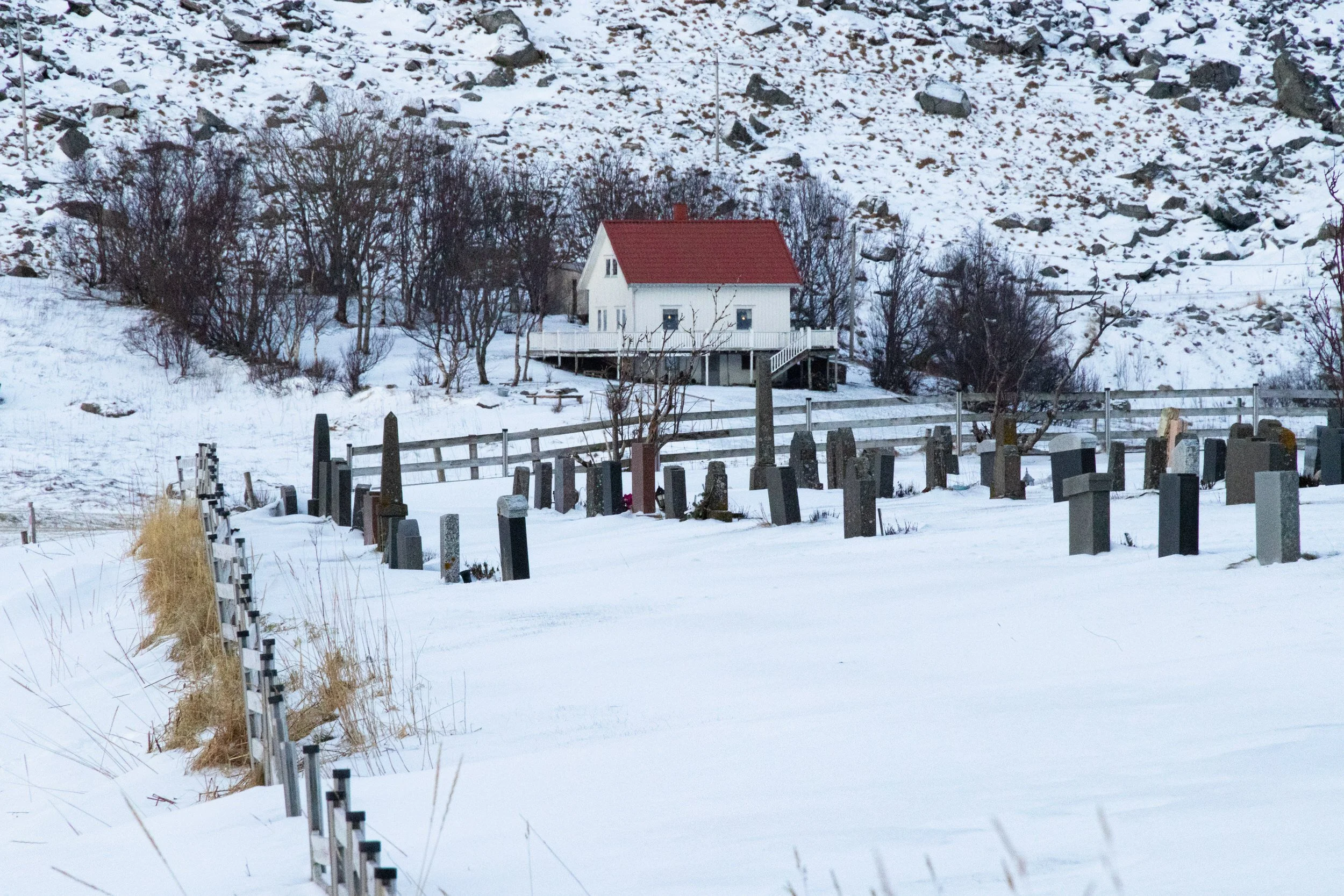
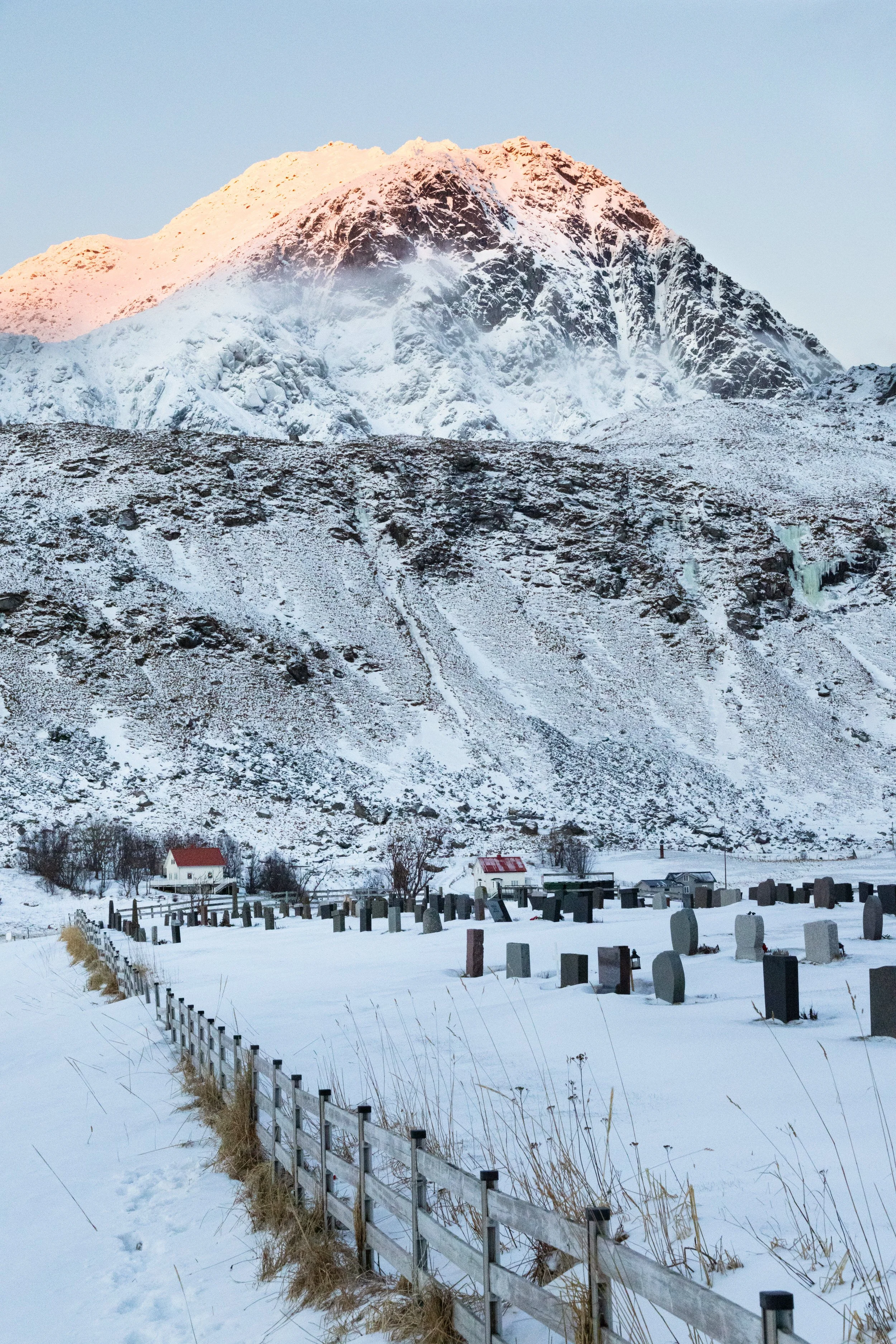
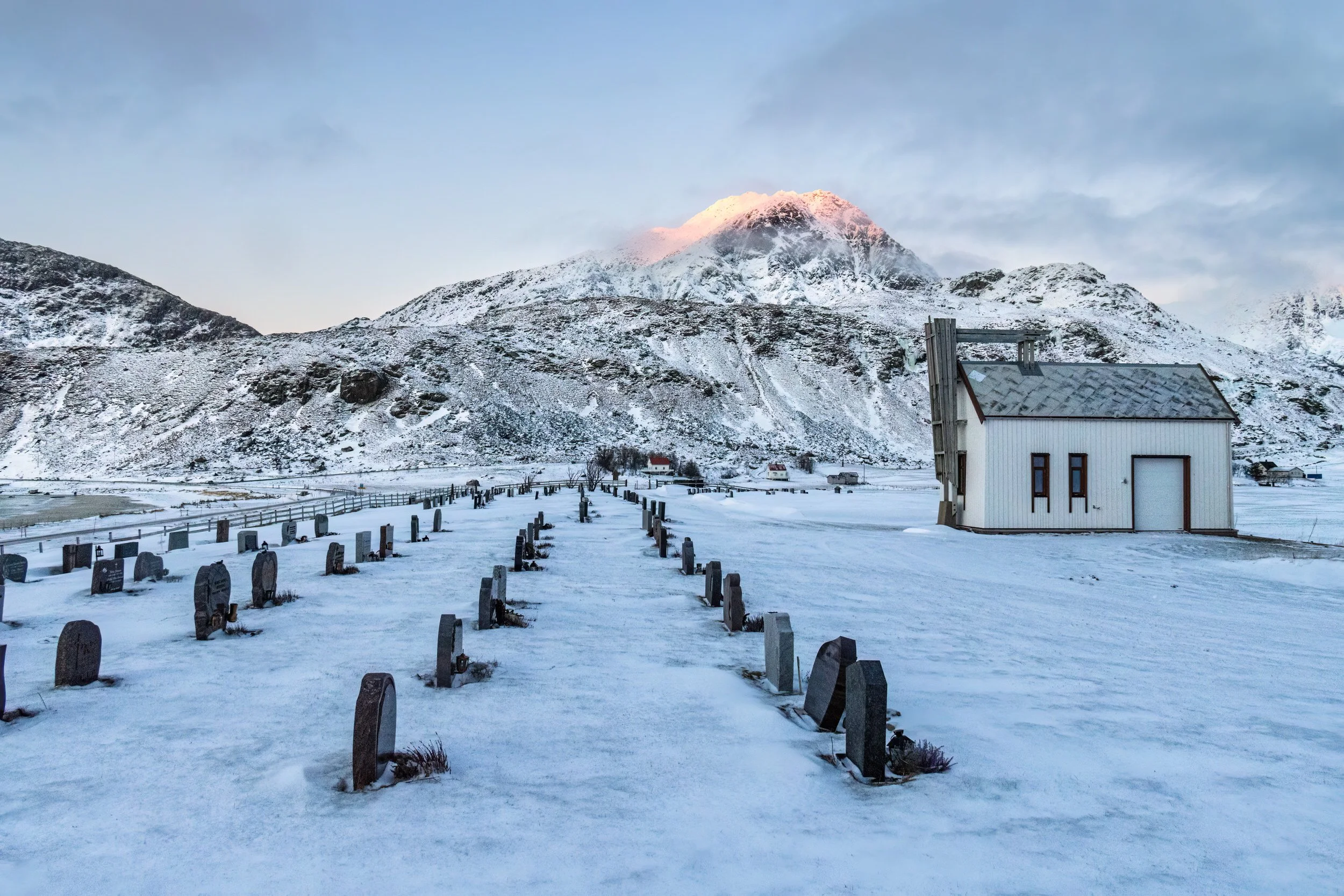
On a fine morning in early February we came to photograph the sweeping beach at Vik Strand. But barely fifty metres from the sand, with a few scattered farmhouses and rising hills behind it, stood a small weathered church and its graveyard. I turned away from the beach and couldn’t stop looking. I’m usually drawn to what is beautiful and uplifting. Here, the cost of living in a place this beautiful was on full display.
Every one of those headstones belonged to someone who chose to stay through winters like this one, who buried their people in frozen ground and went back to work the next morning. Hardy souls. Without sadness we wouldn’t recognise joy, and dawn would mean nothing without the night that came before it.
The graveyard doesn’t spoil the view. It’s the reason the view means something and I was determined to make this photograph work. The scene spoke of so many things at once: desolation and beauty, life and death, isolation and community, sorrow and joy.
It’s my favourite image from the trip, and the one that still holds me longest.